

Friday, May 24, 2013
Hugo Cabret
"Sometimes I come up here at night, even when I'm not fixing the clocks, just to look at the city. I like to imagine that the world is one big machine. You know, machines never have any extra parts. They have the exact number and the type of parts they need. So I figure if the entire world is one big machine, I have to be here for some reason. And that means you have to be here for some reason, too." - Brian Selznick, The Invention of Hugo Cabret


Saturday, May 4, 2013
Poesy: Thrice
Fragment
the confidence.
You gathered them as a fresh-picked bouquet
and closed the gate behind you.
Sleeping sweetly beneath my mother's blanket,
your soft sighs sweeten the edges of the quilt.
I pop in to the room to check,
even for just a moment,
that you and I are still connected
and you haven't left yet,
and neither have I.
-RPJ
Perhaps when you came
you took it all:
the beauty, the youth, you took it all:
the confidence.
and closed the gate behind you.
I pop in to the room to check,
and you haven't left yet,
and neither have I.
-RPJ
Poetry: Lots of Mine Lately Edition
Like all the ones I put up here, it needs work. Sometimes I just get impatient.
(Untitled)
You are a pretty day
chestnut-tousled,
sticky rice
smelling sweetly of chestnut-tousled,
sticky rice
alphabet and aliens.
Give you a flashlight
and you will find
the notes in a cup
and you will find
the notes in a cup
of Irish Breakfast tea.
Smiling over the rim
you just woke up
to a complex, windy day.
you just woke up
to a complex, windy day.
Life as puzzle and painting,
dancing a one-acre plot.
Your grey-blue eyes
chart my movements,
chart my movements,
my inaccuracies and moods.
You are my Jiminy Cricket,
my gypsy conscience,
my comma and following sentence.my gypsy conscience,
-RPJ
Poesy: One-of-Mine Edition
Muse
Rainy day as Chinese watercolor;
the trees are wild with wind.
A grey room, comfortable
with misty windows, condensation
and the audio of the bus line
which squeaks and squeals
bone-chilled passengers forward
whom could not stay indoors.
and the audio of the bus line
which squeaks and squeals
bone-chilled passengers forward
whom could not stay indoors.
The houseplants are caught
with leaves against a chilly window,
with leaves against a chilly window,
variegated greens and yellows
silently shivering in the unusual May gloom.
A Saturday, bone-bleached empty,
hushed respite from the Spring.
An off-day to hide and listen to the hum
of the refrigerator, eat olives and fruit;
disappear.
Only the weather knows I'm here
pregnant with the rain outside my window.
Nothing -
and then a car rips past,
black asphalt and dripping wet,
a train coming in with far-off clacks.
My a.m. song of gooseflesh
and dark brown branches,
black asphalt and dripping wet,
a train coming in with far-off clacks.
My a.m. song of gooseflesh
and dark brown branches,
trembling leaves.
-RPJ
Wednesday, May 1, 2013
Zelda to F. Scott
"Darling, darling I love you so - Today seems like Easter, and I wish we were together walking slow through the sunshine and the crowds from Church- Everything smells so good and warm, and your ring shines so white in the sun-like one of the church lillies with a little yellow dust on it-We ought to be together this Spring-It seems made for us to love in-"
Tuesday, April 23, 2013
Poesy: It's Been a Long Time, But It's One of Mine (Edition)
An unedited poem of mine. It needs work, but here goes anyway:
Fear
I shun them, laugh it off.
I avoid their glances and pretend the stars
are simply decoration, and a watch,
merely for appointment-keeping.
There is no comprehension,
only fear
at the enormity of a thing
able to swallow me up
and disappear into the universe,
small as a pebble, quiet as the wind.
Perhaps I am afraid it will bully me,
and call me names in my non-scienceness.
Leave me for dead on a planet exploding,
or left to drift ageless in lack of oxygen
through the black night forever cloaked in stars.
In truth and secret,
I revere it. From afar.
I add asterisks when not needed
and count seconds in velvet-toned sweetness,
lining them up in my pockets
where I can feel the edges of their numerals,
their infinite tick-tocking
against the pads of my fingers.
Please don't forget me, Space and Time,
Please don't forsake my stuffed-language self.
I am a babe, an unversed scientist, a girl scared
of the immensity of the dark.
I respect your steel claws and physics
and hope, when the day comes,
you will treat me kindly.
- RPJ
Fear
Baffled of the ephemeral Time and Space,
merely for appointment-keeping.
only fear
at the enormity of a thing
able to swallow me up
small as a pebble, quiet as the wind.
In truth and secret,
I revere it. From afar.
and count seconds in velvet-toned sweetness,
their infinite tick-tocking
against the pads of my fingers.
I place memories besides other memories
in visual remembrance of dates we spent together.
I watch my child grow quickly, time lengthening her feet
and the curls of her tri-colored hair.
and hope, when the day comes,
- RPJ
Friday, January 25, 2013

Saturday, January 5, 2013


Thursday, January 3, 2013
Pavane! C'est bon!
C'est Lindor, c'est Tircis et c'est tous nos vainqueurs!
C'est Myrtille, c'est Lydé! Les reines de nos coeurs!
Comme ils sont provocants! Comme ils sont fiers toujours!
Comme on ose régner sur nos sorts et nos jours!
Faites attention! Observez la mesure!
Ô la mortelle injure! La cadence est moins lente!
Et la chute plus sûre! Nous rabattrons bien leur caquets!
Nous serons bientôt leurs laquais!
Qu'ils sont laids! Chers minois!
Qu'ils sont fols! (Airs coquets!)
Et c'est toujours de même, et c'est ainsi toujours!
On s'adore! On se hait! On maudit ses amours!
Adieu Myrtille, Eglé, Chloé, démons moqueurs!
Adieu donc et bons jours aux tyrans de nos coeurs!
Et bons jours!
Wednesday, January 2, 2013

Monday, December 24, 2012

Tuesday, December 4, 2012
Moments of Pooh
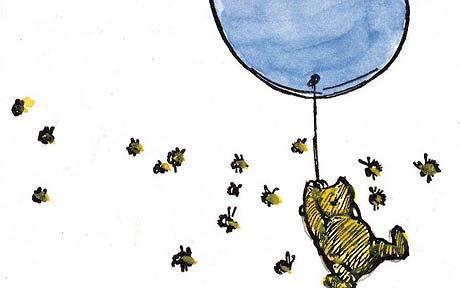
Reading Winnie the Pooh while Lillian falls asleep in my lap for her morning nap, there is no greater feeling. Light symphonic music playing, the intermittent clamor of outside goings-on, her breath getting deeper and deeper and she is eventually gone from the story - gone from me and into that special restful place where she backs up and stores all we've done for the morning.
I am thankful for my life. I have always tried to appreciate what wonderful things I've been given, but sometimes, I am swept away by the immensity of it.
And, I am thankful for Pooh. How did I never read this book when I was little? How is this my first time with the story? It is so quiet, thoughtful, egocentrically perfect for two or three-year-olds.

Wednesday, November 28, 2012
Posey: A Haiku-A-Day Challenge

If I could teach you
Anything, let it be to
Open every door.
Poesy: William Blake
Auguries of Innocence
- William Blake
via poets.org
To see a World in a Grain of Sand
And a Heaven in a Wild Flower
Hold Infinity in the palm of your hand
And Eternity in an hour
A Robin Red breast in a Cage
Puts all Heaven in a Rage
A Dove house filld with Doves & Pigeons
Shudders Hell thr' all its regions
A dog starvd at his Masters Gate
Predicts the ruin of the State
A Horse misusd upon the Road
Calls to Heaven for Human blood
Each outcry of the hunted Hare
A fibre from the Brain does tear
A Skylark wounded in the wing
A Cherubim does cease to sing
The Game Cock clipd & armd for fight
Does the Rising Sun affright
Every Wolfs & Lions howl
Raises from Hell a Human Soul
The wild deer, wandring here & there
Keeps the Human Soul from Care
The Lamb misusd breeds Public Strife
And yet forgives the Butchers knife
The Bat that flits at close of Eve
Has left the Brain that wont Believe
The Owl that calls upon the Night
Speaks the Unbelievers fright
He who shall hurt the little Wren
Shall never be belovd by Men
He who the Ox to wrath has movd
Shall never be by Woman lovd
The wanton Boy that kills the Fly
Shall feel the Spiders enmity
He who torments the Chafers Sprite
Weaves a Bower in endless Night
The Catterpiller on the Leaf
Repeats to thee thy Mothers grief
Kill not the Moth nor Butterfly
For the Last Judgment draweth nigh
He who shall train the Horse to War
Shall never pass the Polar Bar
The Beggars Dog & Widows Cat
Feed them & thou wilt grow fat
The Gnat that sings his Summers Song
Poison gets from Slanders tongue
The poison of the Snake & Newt
Is the sweat of Envys Foot
The poison of the Honey Bee
Is the Artists Jealousy
The Princes Robes & Beggars Rags
Are Toadstools on the Misers Bags
A Truth thats told with bad intent
Beats all the Lies you can invent
It is right it should be so
Man was made for Joy & Woe
And when this we rightly know
Thro the World we safely go
Joy & Woe are woven fine
A Clothing for the soul divine
Under every grief & pine
Runs a joy with silken twine
The Babe is more than swadling Bands
Throughout all these Human Lands
Tools were made & Born were hands
Every Farmer Understands
Every Tear from Every Eye
Becomes a Babe in Eternity
This is caught by Females bright
And returnd to its own delight
The Bleat the Bark Bellow & Roar
Are Waves that Beat on Heavens Shore
The Babe that weeps the Rod beneath
Writes Revenge in realms of Death
The Beggars Rags fluttering in Air
Does to Rags the Heavens tear
The Soldier armd with Sword & Gun
Palsied strikes the Summers Sun
The poor Mans Farthing is worth more
Than all the Gold on Africs Shore
One Mite wrung from the Labrers hands
Shall buy & sell the Misers Lands
Or if protected from on high
Does that whole Nation sell & buy
He who mocks the Infants Faith
Shall be mockd in Age & Death
He who shall teach the Child to Doubt
The rotting Grave shall neer get out
He who respects the Infants faith
Triumphs over Hell & Death
The Childs Toys & the Old Mans Reasons
Are the Fruits of the Two seasons
The Questioner who sits so sly
Shall never know how to Reply
He who replies to words of Doubt
Doth put the Light of Knowledge out
The Strongest Poison ever known
Came from Caesars Laurel Crown
Nought can Deform the Human Race
Like to the Armours iron brace
When Gold & Gems adorn the Plow
To peaceful Arts shall Envy Bow
A Riddle or the Crickets Cry
Is to Doubt a fit Reply
The Emmets Inch & Eagles Mile
Make Lame Philosophy to smile
He who Doubts from what he sees
Will neer Believe do what you Please
If the Sun & Moon should Doubt
Theyd immediately Go out
To be in a Passion you Good may Do
But no Good if a Passion is in you
The Whore & Gambler by the State
Licencd build that Nations Fate
The Harlots cry from Street to Street
Shall weave Old Englands winding Sheet
The Winners Shout the Losers Curse
Dance before dead Englands Hearse
Every Night & every Morn
Some to Misery are Born
Every Morn and every Night
Some are Born to sweet delight
Some are Born to sweet delight
Some are Born to Endless Night
We are led to Believe a Lie
When we see not Thro the Eye
Which was Born in a Night to perish in a Night
When the Soul Slept in Beams of Light
God Appears & God is Light
To those poor Souls who dwell in Night
But does a Human Form Display
To those who Dwell in Realms of day
| |
- William Blake
via poets.org
Saturday, November 17, 2012

Thursday, November 15, 2012
Poesy: Marilyn Krysl
Sutra
Looking back now, I see
I was dispassionate too often,
dismissing the robin as common,
and now can't remember what
robin song sounds like. I hoarded
my days, as though to keep them
safe from depletion, and meantime
I kept busy being lonely. This
took up the bulk of my time,
and I did not speak to strangers
because they might be boring,
and there were those I feared

would ask me for money. I was
clumsy around the confident,
and the well bred, standing on
their parapets, enthralled me,
but when one approached, I
fled. I also feared the street's
down and outs, anxious lest
they look at me closely, and
afraid I would see their misery.

I feared my father who feared
me and did not touch me,
which made me more afraid.
My mother feared him too,
and as I grew to be like him,
she became afraid of me also.
I kept busy avoiding dangers
of many colors, fleeing from
those with whom I had much

in common. Now afternoon,
one chair in the garden. Late
low light, the lilies still open,
sky beyond them preparing
to close for the night. I'd
made money, but had I kissed

a single lily? On the chair's
arm my empty cup. Its curved
lip struck, bright in late light.
I watch that last light going,
leaving behind its brief burning
 which will come to nothing.

The lilies still open, waiting.

Let me be that last sliver of light.
Let me be that last gleaming sliver of silver,
there for an instant on the lily's petal,

light speaking in tongues, tongues of flame.
- Marilyn Krysl
via poets.org
Wednesday, November 14, 2012


Sunday, October 21, 2012
Dear Elizabeth Taylor,
It's been so long, so long since we've talked through letters.
My life has changed so much, and I am humbled by the work it takes to have a little (big) one such as you.
I put in the mix I made for us before you were born. It was supposed to be my "hospital mix" to greet you into the world but when it was time to greet you I was in full swing of delivery and the music was forgotten. Now it is a reminder of that time, and of the subtle hint of you, of your personality. We drove through McCalla singing and drumming drums to Chicago, (the band of course), Kris Kristofferson, some random ragtime music, and I was moved to tears. It seems it takes only that these days.
You are almost two. It is insane you walk down the steps alone. You speak clearly and communicate exactly what you want and I am in awe. You are pure rock and roll with your dancing and sentiment and I am slain by your commitment. You write music with every move you make.
You are asleep on our bed and I almost want to wake you, just to say,
Thanks.
Thanks for changing my life.
Thanks for loving the way that you do - for singing alone in the back seat, for smiling mischievously, for never really falling asleep. For loving Chicago and the Rolling Stones.
Love,
Cabbage
It's been so long, so long since we've talked through letters.
My life has changed so much, and I am humbled by the work it takes to have a little (big) one such as you.
I put in the mix I made for us before you were born. It was supposed to be my "hospital mix" to greet you into the world but when it was time to greet you I was in full swing of delivery and the music was forgotten. Now it is a reminder of that time, and of the subtle hint of you, of your personality. We drove through McCalla singing and drumming drums to Chicago, (the band of course), Kris Kristofferson, some random ragtime music, and I was moved to tears. It seems it takes only that these days.
You are almost two. It is insane you walk down the steps alone. You speak clearly and communicate exactly what you want and I am in awe. You are pure rock and roll with your dancing and sentiment and I am slain by your commitment. You write music with every move you make.
You are asleep on our bed and I almost want to wake you, just to say,
Thanks.
Thanks for changing my life.
Thanks for loving the way that you do - for singing alone in the back seat, for smiling mischievously, for never really falling asleep. For loving Chicago and the Rolling Stones.
Love,
Cabbage
Tuesday, July 3, 2012
Poesy: Federico Garcia Lorca
Arbolé, Arbolé . . .
Tree, tree
dry and green.

The girl with the pretty face
is out picking olives.
The wind, playboy of towers,
grabs her around the waist.
Four riders passed by
on Andalusian ponies,
with blue and green jackets
and big, dark capes.
"Come to Cordoba, muchacha."
The girl won't listen to them.
Three young bullfighters passed,
slender in the waist,
with jackets the color of oranges
and swords of ancient silver.
"Come to Sevilla, muchacha."
The girl won't listen to them.
When the afternoon had turned
dark brown, with scattered light,
a young man passed by, wearing
roses and myrtle of the moon.
"Come to Granada, muchacha."
And the girl won't listen to him.
The girl with the pretty face
keeps on picking olives
with the grey arm of the wind
wrapped around her waist.
Tree, tree
dry and green.
- Federico García Lorca
translated by William Logan
Friday, June 29, 2012
Savor Things
Current list of things I love:
- The library
- Choctaw Indians
- My sweet girl who loves to draw all of a sudden. And by draw, I mean use markers to write on every surface possible. Her hands being her favorite.
- Closing the blinds on ridiculously hot days and pretending we are underground.
- We are playing music regularly again.
- Feeling like I have come out of a haze and all of a sudden Saturn isn't on my shoulders.
Saturday, June 2, 2012

Friday, February 17, 2012
You Should Go To -
Alabama Goods in Homewood.
Get yerself some local gifts.
Who doesn't want an Alabama-shaped cutting board?

Get yerself some local gifts.
Who doesn't want an Alabama-shaped cutting board?

Friday, February 10, 2012


Wednesday, December 7, 2011

Tuesday, December 6, 2011
Tuesday, November 29, 2011

Tuesday, October 25, 2011
Subscribe to:
Posts (Atom)